
Vatican Museums Tickets for Students
Discounts, Concessions & Cheapest Options
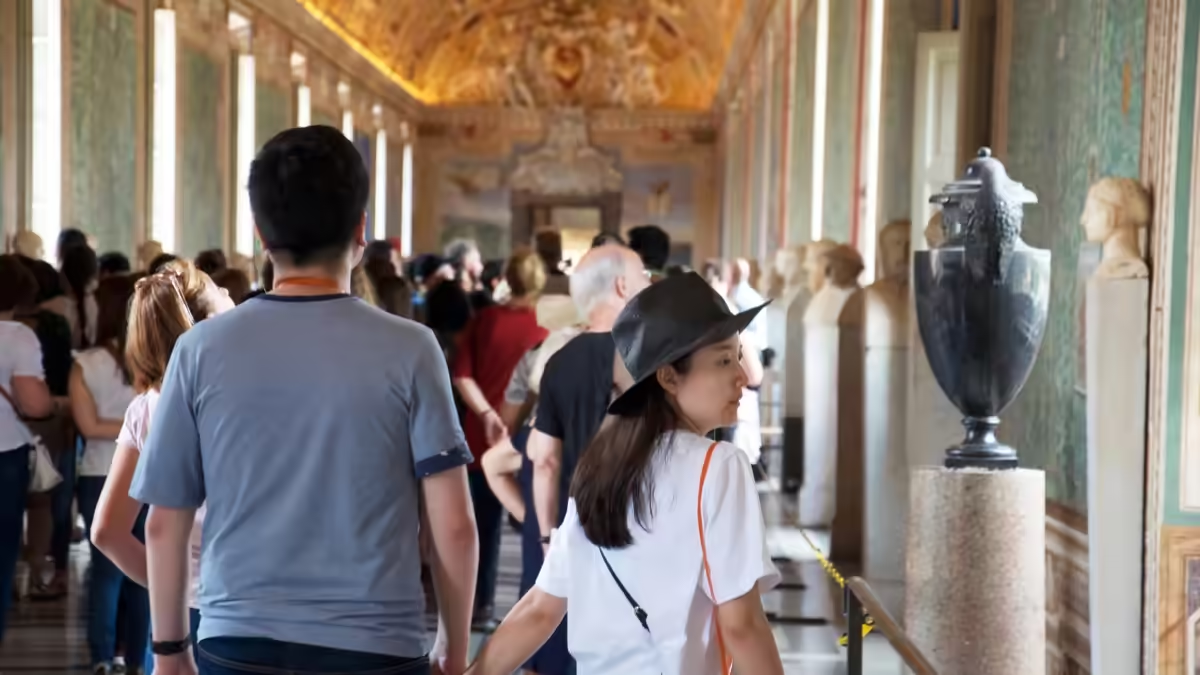
EU citizens aged 18–25 receive a 50% concession on Vatican Museums admission — from €8 on the official site (tickets.museivaticani.va) with a valid EU national ID or passport showing date of birth. Non-EU students do not receive a concession and pay the standard adult rate (from €39 via third-party platforms, or €20 + booking fee on the official site). There is no ISIC or international student card discount. The last Sunday of each month offers free entry for all visitors, though it is extremely crowded.
The Vatican Museums house one of the greatest art collections in human history — and for students with a genuine interest in Renaissance painting, classical sculpture, or papal history, it is one of the most rewarding visits in Europe. Knowing which discount applies to you, how to book at the cheapest rate, and how to plan the visit intelligently can significantly reduce both cost and time spent queuing.
This guide covers EU student concession rates, non-EU student options, the cheapest ways to visit, and practical planning advice for student visitors.
Top Tickets
Student Discounts at the Vatican Museums
The Vatican Museums offer a 50% concession to EU citizens aged 18–25 — from €8 adult concession on the official site with a valid EU national ID card or passport. This is a citizenship-based discount, not a student card discount: ISIC cards, university IDs, and international student cards are not accepted. Non-EU students pay the standard adult rate. The concession is available on the official Vatican Museums site (tickets.museivaticani.va) and at the Special Permits desk inside the entrance.
| Visitor Type | Price | How to Claim |
|---|---|---|
| EU citizens (18–25) | from €8 on official site | Valid EU national ID or passport showing date of birth; available at tickets.museivaticani.va |
| Non-EU students (any age) | from €39 (third-party) / €20 + fee (official) | No student discount — standard adult rate applies |
| Children under 6 | Free | No ticket required |
| All visitors — Last Sunday of month | Free | Extremely crowded; no booking required but long queues |
Important for EU students:
Cheapest Ways for Students to Visit the Vatican Museums
Option 1 — Official Site Concession (EU Students, Cheapest)
If you are an EU citizen aged 18–25, the official Vatican Museums site offers admission from €8 — the cheapest possible entry. Book directly on tickets.museivaticani.va, select the reduced-rate (concession) ticket, and bring your EU national ID card or passport on the day. This is significantly cheaper than any third-party option.
Price: from €8 per person (EU citizens 18–25 only)
Booking: tickets.museivaticani.va — select concession rate
Required at entry: Valid EU national ID card or passport showing date of birth
Option 2 — Last Sunday of the Month (Free for All)
The Vatican Museums offer free entry on the last Sunday of each month (9am–2pm, last entry 12:30pm). There is no ticket required — entry is on a first-come, first-served basis. This is the cheapest possible option for any student regardless of nationality. The trade-off: this is the single most crowded day of the museum year. Queues form before 8am and the Sistine Chapel is packed throughout. If you are visiting primarily for the art and want to actually see it, this is not the best option.
Price: Free
Trade-off: Extremely crowded; queues of 2–3+ hours; Sistine Chapel packed all day
Best for: Budget-constrained students who can tolerate crowds and are flexible on dates
Option 3 — Self-Guided Skip-the-Line Ticket (Non-EU Students)
For non-EU students paying the standard rate, the self-guided skip-the-line ticket (from €39) is the cheapest way to visit with a confirmed entry time. You avoid any queue uncertainty on the day and explore at your own pace with an optional audio guide. For students with a genuine interest in the art, adding the audio guide (included in some ticket versions) significantly enriches the visit.
Price: from €39 adult (standard rate)
Best for: Non-EU students, independent travellers, return visitors
What Students Should Prioritise at the Vatican Museums
For students with an interest in art history or classical studies, the three must-see areas are: the Raphael Rooms (four rooms of frescoes by Raphael for Popes Julius II and Leo X, including the School of Athens — probably the single most important Renaissance painting for understanding the relationship between classical antiquity and the Renaissance); the Sistine Chapel (Michelangelo’s ceiling and The Last Judgment, best understood with prior knowledge of the Book of Genesis and the political context of the 1530s papacy); and the Pio-Clementino Museum (the Laocoön and His Sons and the Apollo Belvedere — two ancient sculptures that defined European aesthetic theory for 300 years).
Raphael Rooms
The four Stanze di Raffaello are among the most important rooms in the history of Western painting. The Room of the Segnatura contains the School of Athens (Plato and Aristotle surrounded by ancient philosophers) and the Disputation of the Sacrament — the two paintings represent the relationship between reason and faith, philosophy and theology. For art history students, understanding these rooms is essential context for the entire Italian Renaissance.
Sistine Chapel
Michelangelo painted the ceiling between 1508 and 1512 under considerable duress — he considered himself a sculptor, not a painter, and resented the commission from Julius II. The nine central panels tell the story of Genesis; the corner spandrels depict Old Testament salvation narratives; the lunettes portrait the ancestors of Christ. The Last Judgment (1534–1541) on the altar wall is a later, darker work — painted in the years following the Sack of Rome (1527) and the theological crisis of the Reformation. Understanding both the iconographic programme and the historical context transforms the experience.
Pio-Clementino Museum
The Laocoön and His Sons — discovered in Rome in 1506 and immediately acquired by Pope Julius II — had a profound impact on Michelangelo’s own sculpture and on the development of Mannerism. The Apollo Belvedere became the canonical model of masculine beauty for European sculpture from the Renaissance through the Neoclassical period. For classical studies or art history students, seeing the originals is a genuinely different experience from studying reproductions.
Student Planning Tips
- Book early for morning slots — 8am on weekdays gives the Raphael Rooms and Sistine Chapel at their least crowded; essential if you want to actually study the works rather than shuffle past them
- Allow 3 to 4 hours — a thorough student visit — including time to study individual works rather than move through quickly — requires more time than the average tourist itinerary
- Download the Vatican Museums official app — provides detailed gallery maps and commentary; useful preparation before arrival
- Photography — permitted everywhere in the Museums except the Sistine Chapel; no tripods or selfie sticks anywhere
- Dress code — applies to all visitors; shoulders and knees must be covered
- Avoid the last Sunday if you’re going for the art — free entry is appealing but the Sistine Chapel is unworkable for serious study on the most crowded day of the month
Frequently Asked Questions
Do students get a discount at the Vatican Museums?
EU citizens aged 18–25 receive a 50% discount (from €8) on the official Vatican Museums site. This is a citizenship and age-based concession, not a student discount — ISIC cards and university IDs are not accepted. Non-EU students pay the standard adult rate.
Is an ISIC card accepted at the Vatican Museums?
No. The Vatican Museums do not accept ISIC (International Student Identity Card) or any other international student card. The only concession for visitors in the student age bracket is the EU citizenship concession for those aged 18–25 with a valid EU national ID.
When is the Vatican Museums free?
The Vatican Museums offer free entry on the last Sunday of each month (9am–2pm, last entry 12:30pm). No ticket is required, but queues form before 8am and the museums are extremely crowded throughout the day. This is not recommended for visitors who want to study the art.
Can I visit the Vatican Museums with a student budget?
Yes — EU students aged 18–25 can visit for as little as €8 on the official site. Non-EU students pay the standard rate from €39. For the absolute cheapest option, the last Sunday of the month is free but very crowded. For a comfortable visit with confirmed entry at a reasonable cost, the self-guided skip-the-line ticket (from €39) is the most reliable option. See our last-minute tickets guide if you’re booking with little notice.
How long should students allow for the Vatican Museums?
For a thorough visit including time to study the Raphael Rooms and Sistine Chapel properly, allow 3 to 4 hours. The full visitor route covers approximately 4.8km. Most casual tourist visits take 2 to 2.5 hours — students interested in the art will typically want longer.
Related Guides
