
Vatican Museums Floor Map & Layout Guide
Gallery Layout, Floors & What’s Where
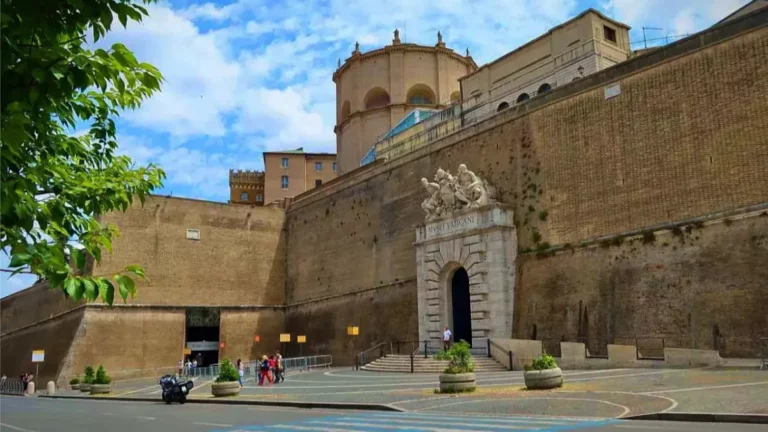
The Vatican Museums occupy two main floors (Ground Floor and Upper Floor) plus a basement level, spread across 54 galleries and 7km of exhibition space housing 70,000 artefacts (20,000 on display). The main entrance is on Viale Vaticano. The Sistine Chapel is on the Ground Floor (first floor), reached at the end of the standard visitor route through the Upper Floor galleries. The exit is through the same main entrance on Viale Vaticano — there is a single entrance and exit point. A second exit via the Sistine Chapel internal passageway to St. Peter’s Basilica is available on some guided tours.
Understanding the Vatican Museums layout before you arrive makes a significant difference to your visit. The complex is often described as labyrinthine — 54 galleries across multiple levels, no obvious signposting of what comes next, and a visitor route that takes you through galleries in a fixed sequence. Knowing where the Sistine Chapel is relative to the entrance, which floor the key galleries are on, and where the facilities are located helps you plan an efficient, comfortable visit.
This guide covers the complete floor-by-floor layout, where to find every major gallery, the location of facilities on each level, and practical navigation tips.
Top Tickets
Vatican Museums Layout — Overview

The Vatican Museums are structured across three levels. The Upper Floor (Level 2) contains the major galleries — Gallery of the Candelabra, Gallery of Tapestries, Gallery of Maps, Room of the Immaculate Conception, and the four Raphael Rooms. The Ground Floor (Level 1) contains the Gregorian Egyptian Museum, Chiaramonti Museum, New Wing, Pio-Clementino Museum, Borgia Apartments, Sistine Chapel, Christian Museum, Vatican Library, and Vatican Pinacoteca. The Basement contains the Philately and Numismatic Museum, Ethnological Museum, and Carriage Pavilion. Most visitors follow the standard route from entrance through the Upper Floor to the Sistine Chapel without visiting the Basement galleries.
One important note on the Vatican Museums’ floor numbering convention: what is called the ‘Ground Floor’ (or First Floor in some guides) is the level containing the Sistine Chapel — reached after descending from the Upper Floor at the end of the gallery route. The entrance level is typically referred to as the reception level. This guide uses the terms Upper Floor and Ground Floor to avoid confusion.
Ground Floor (Level 1) — Galleries
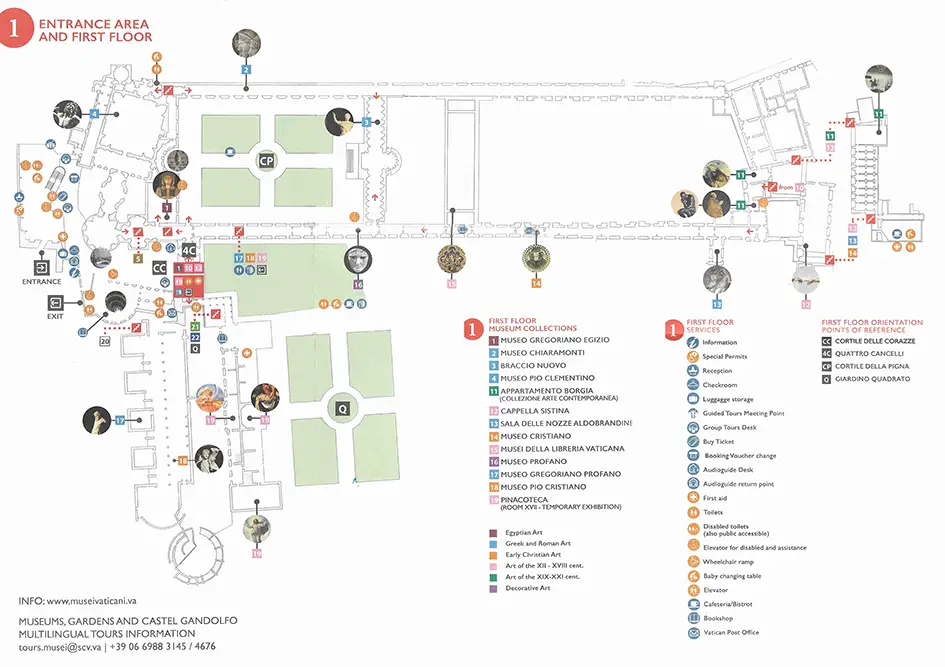
The Ground Floor contains: the Gregorian Egyptian Museum (ancient Egypt artefacts, mummies, sarcophagi, Book of the Dead); the Chiaramonti Museum (Roman sculpture, 800+ ancient busts and statues along a 300m corridor); the New Wing / Braccio Nuovo (Roman Imperial sculpture including the Augustus of Prima Porta); the Pio-Clementino Museum (the Laocoön and His Sons, Apollo Belvedere, ancient classical sculpture); the Borgia Apartments (Renaissance frescoes commissioned by Pope Alexander VI); the Sistine Chapel; the Christian Museum, Vatican Library (partially accessible), and Vatican Pinacoteca.
Gregorian Egyptian Museum (Rooms 1–9)
One of the most important Egyptian collections outside Egypt. Contains mummies, sarcophagi, the Book of the Dead, canopic jars, hieroglyphic monuments, and an impressive sphinx statue. Less visited than the main gallery route — worth the detour for Egyptian history enthusiasts.
Chiaramonti Museum
A 300-metre corridor lined with over 800 ancient Roman busts, statues, and inscriptions collected by Pope Pius VII. One of the largest collections of Roman portraiture in the world. The scale is extraordinary — faces of Roman emperors, citizens, and deities staring from both walls the entire length of the corridor.
Pio-Clementino Museum
The centrepiece of the Vatican’s ancient sculpture collection. The Octagonal Courtyard contains the Laocoön and His Sons (discovered in Rome in 1506, immediately acquired by Pope Julius II, profoundly influential on Michelangelo) and the Apollo Belvedere (the canonical model of masculine beauty for Renaissance and Neoclassical European art). The Hall of the Muses, Hall of the Animals, and Gallery of Statues extend the classical collection across interconnected rooms.
Sistine Chapel
The culmination of the standard Vatican Museums visitor route. Michelangelo painted the ceiling between 1508 and 1512 (nine panels depicting Genesis, from the Separation of Light and Darkness to the Drunkenness of Noah) and The Last Judgment on the altar wall between 1534 and 1541. Photography is prohibited; silence is required. Guards enforce both rules. For a full guide to the Sistine Chapel, see our Sistine Chapel visitor guide.
Vatican Pinacoteca
A standalone painting gallery housed in a separate building within the Vatican Museums complex. Contains works by Raphael (Transfiguration, his last major work), Caravaggio (Deposition from the Cross), Leonardo da Vinci (unfinished St. Jerome in the Wilderness), Giotto, Fra Angelico, and Titian. Less crowded than the main route — often overlooked by visitors rushing toward the Sistine Chapel.
Upper Floor (Level 2) — The Main Gallery Route
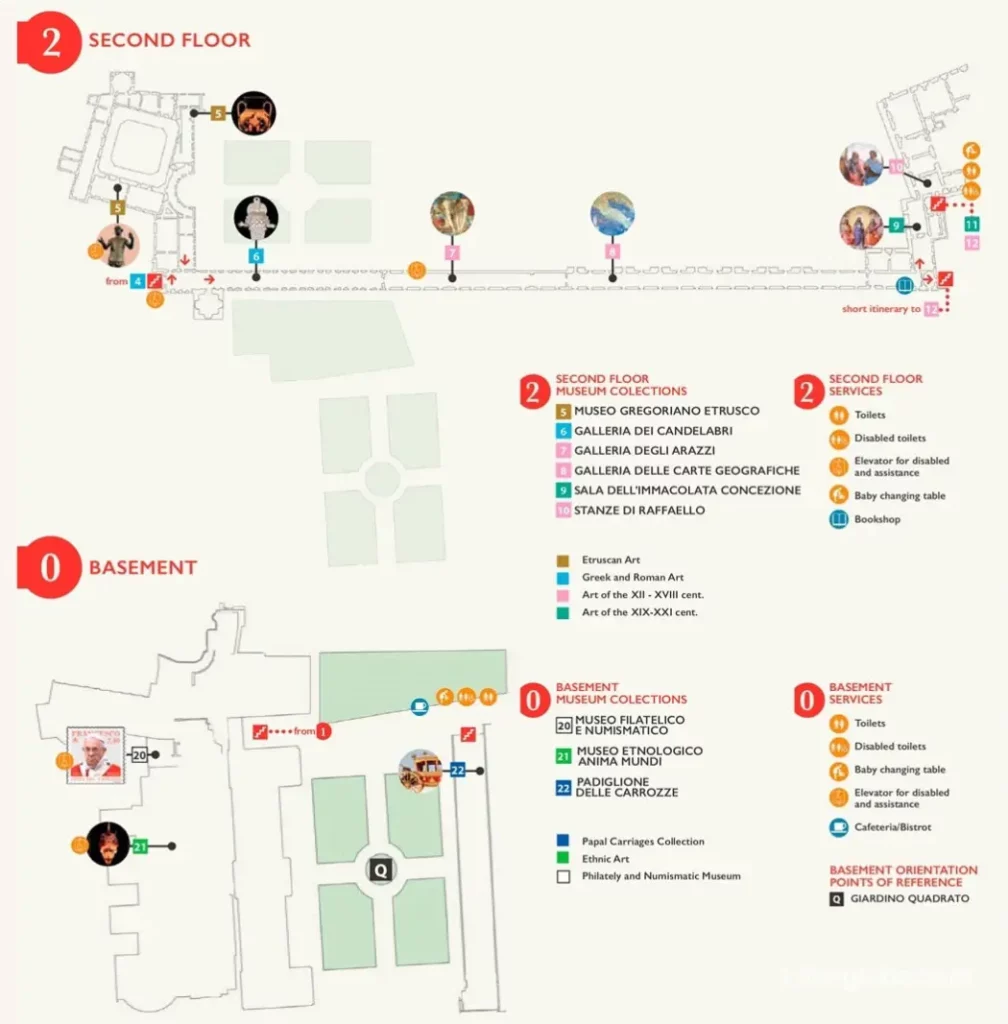
The Upper Floor contains the main sequence of galleries most visitors walk through: Gallery of the Candelabra (decorative sculpture, ancient candelabra, sarcophagi); Gallery of Tapestries (monumental Flemish tapestries depicting scenes from the life of Christ); Gallery of Maps (120m corridor of 40 topographical fresco maps of Italy); Room of the Immaculate Conception; and the four Raphael Rooms (Stanze di Raffaello — the most important frescoed rooms in the Museums). Visitors descend from the Raphael Rooms to the Sistine Chapel.
Gallery of the Candelabra
A long corridor named for the pairs of ancient Roman candelabra displayed at intervals. Contains ancient sarcophagi, Hellenistic sculpture, and Roman copies of Greek originals. Well-lit and spacious — a pleasant introduction to the main gallery route after the more intense Pio-Clementino rooms below.
Gallery of Tapestries
Contains large-scale Flemish tapestries woven in Brussels in the 1520s based on cartoons from Raphael’s workshop, depicting scenes from the life of Christ (including the Resurrection). On the opposite wall, tapestries from the workshop of Urban VIII. The gallery rewards close attention — many visitors walk quickly through on their way to the Gallery of Maps.
Gallery of Maps
One of the most impressive single spaces in the Museums. A 120-metre-long corridor with 40 topographical fresco maps of Italy’s regions commissioned by Pope Gregory XIII in the 1580s. The ceiling above — painted with historical scenes from the early Church — is equally spectacular but frequently missed. The map depicting Italy as a boot is the one most photographed; the maps of Rome and the Papal States show Rome as it appeared in the 16th century. Photography is permitted.
Raphael Rooms (Stanze di Raffaello)
Four interconnected rooms decorated entirely by Raphael (and his workshop after his death in 1520) for Popes Julius II and Leo X. The Room of the Segnatura (Raphael’s first commission) contains the School of Athens and the Disputation of the Sacrament — among the most important paintings in the Western canon. The Room of Heliodorus, Room of the Fire in the Borgo, and Hall of Constantine complete the sequence. Allow 30–45 minutes for this section.
Basement Level — Additional Collections
The basement is reached via stairs or elevator from the Ground Floor. Less visited than the upper levels, it contains:
- Philately and Numismatic Museum — papal coins, medals, and stamps from the Vatican collections
- Ethnological Museum — artefacts from Catholic missionary activity worldwide, covering five continents
- Carriage Pavilion — historic papal carriages, sedia gestatoria (papal throne), and vehicles used in papal processions from the 17th century to the modern era. A surprising highlight for visitors who discover it
Facilities by Floor
| Facility | Ground Floor (Level 1) | Upper Floor (Level 2) | Basement |
|---|---|---|---|
| Toilets | ✓ | ✓ | ✓ |
| Disabled toilets | ✓ | ✓ | ✓ |
| Elevator (disabled) | ✓ | ✓ | ✓ |
| Baby changing | ✓ | ✓ | ✓ |
| Cafeteria | ✓ (main) | ✓ (Pinecone Courtyard Bistro) | ✓ |
| Bookshop | ✓ | ✓ | — |
| Cloakroom / luggage | ✓ (entrance) | — | — |
| First aid | ✓ | — | — |
| Audio guide desk | ✓ (near entrance) | — | — |
| Vatican post office | ✓ | — | — |
Entrance, Exit, and Navigation
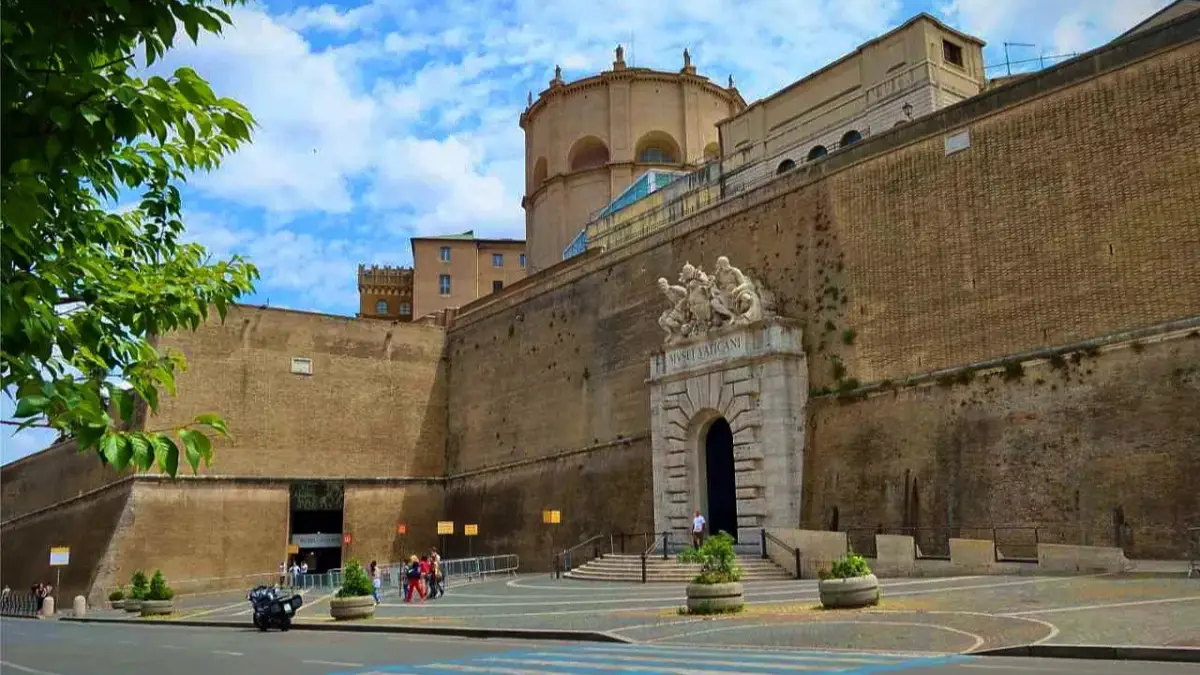
The Vatican Museums have one main entrance and one main exit — both on Viale Vaticano on the north side of Vatican City. There is no separate exit. Guided tours that include St. Peter’s Basilica access the Basilica via an internal passageway from the Sistine Chapel — this passage is only available on specific guided tour tickets, not on self-guided entry. The visitor route runs broadly west to east through the Upper Floor galleries then descends to the Sistine Chapel. Allow 2.5 to 4 hours for the full route.
- Main entrance: Viale Vaticano (north side of Vatican City) — look for the yellow ‘Online Tickets’ signboard
- Main exit: Same as entrance — back onto Viale Vaticano via the Momo helical spiral staircase
- Sistine Chapel exit (guided tours only): Internal passage to St. Peter’s Basilica — only available on specific guided tour products
- Tip — Sistine Chapel first: If you want to visit the Sistine Chapel before the crowds, tell reception staff immediately on entering that you want to go there first. You will be directed left through the museums; this goes against the standard flow but is permitted
- Accessible entrance: Separate entrance opposite the Pinecone Courtyard for visitors with disabilities
Standard Visitor Route — Step by Step
- Entrance on Viale Vaticano → ticket validation → security screening
- Atrium → escalator or stairs to Upper Floor
- Gregorian Egyptian Museum (optional — Ground Floor, loop back)
- Upper Floor: Gallery of the Candelabra → Gallery of Tapestries
- Gallery of Maps (120m corridor) — allow 20–30 minutes
- Room of the Immaculate Conception → Raphael Rooms — allow 30–45 minutes
- Descent via staircase to Ground Floor → Sistine Chapel — allow 20–40 minutes
- Exit via Momo spiral staircase → Viale Vaticano
- Optional side visit: Vatican Pinacoteca (before or after main route)
For a full recommended route with timing, see our Vatican Museums itinerary guide.
Frequently Asked Questions
Where is the Sistine Chapel in the Vatican Museums?
The Sistine Chapel is on the Ground Floor (Level 1) of the Vatican Museums, at the end of the standard visitor route. You reach it after walking through the Upper Floor galleries — Gallery of Maps, Gallery of Tapestries, and Raphael Rooms — and then descending. It is not directly accessible from the entrance without walking the full gallery route first (unless you ask to go directly, which staff can arrange).
How many floors does the Vatican Museums have?
The Vatican Museums have two main exhibition floors (Upper Floor and Ground Floor) and a basement level. Most visitors spend their time on the Upper Floor (main galleries) and Ground Floor (Sistine Chapel, Pio-Clementino Museum).
Is there a lift / elevator in the Vatican Museums?
Yes — elevators are available on all floors for visitors with disabilities or mobility needs. There is also a separate accessible entrance opposite the Pinecone Courtyard for visitors using wheelchairs.
Can I visit the Vatican Pinacoteca on a standard ticket?
Yes — the Vatican Pinacoteca is included in all standard Vatican Museums tickets. It is a separate building within the complex and is accessed from the main entrance level.
How long does it take to walk the Vatican Museums?
The full visitor route covers approximately 4.8km. A thorough visit of all major galleries takes 3 to 4 hours. A focused visit covering only the Gallery of Maps, Raphael Rooms, and Sistine Chapel takes approximately 2 to 2.5 hours. For detailed timing by gallery, see our how long to spend at the Vatican Museums guide.
Related Guides
